
Learning to Observe
News, experiments, and new work from the QS community

What can we learn when we pay closer attention to our own lives?
Hi, Gary Wolf here. That question has been at the center of Quantified Self since Kevin Kelly and I founded it in 2008, after working together during the early years of Wired. We were interested in emerging practices such as life logging, personal genomics, location tracking, and biometrics, all of which added a computational dimension to everyday experience.
While companies were using personal data to understand and influence people, we saw individuals using it to learn about themselves. We wondered whether personal data, like computers before it, could evolve from an institutional tool into something people could use for their own purposes.
The turning point came when Kevin invited anyone who shared our interests to a “Show & Tell” at his studio in Pacifica, California. Thirty people came, many with fascinating projects and extraordinary curiosity. We wanted to do it again, so we created a Meetup group, and soon an informal network of independent local groups sprang up, sharing a common orientation toward empirical self-research.
My book based on these experiences, The Quantified Self: Learning to Observe, is coming out this fall from Workman Publishing. I have five coauthors. All of us have been deeply involved in the Quantified Self community as organizers, researchers, and toolmakers, and this is our attempt to make the practice of personal science accessible to everybody.
That’s a long way around to saying that we’re celebrating the publication of the book by reviving the QS website and archive, and starting this newsletter. Maybe we’ll even manage to organize a reunion conference after publication. Please let us know in the comments or by email if you’d like to be there—and feel free to forward to a friend or colleague who might be interested as well.
You’re getting this email because you are on our Quantified Self newsletter list. In restarting we changed our provider to Substack; I hope you’ll stick with us but it’s easy to unsubscribe if you want.
To begin, here are two books I kept in front of me during the two years it took to bring The Quantified Self: Learning to Observe across the finish line.
Inspiration
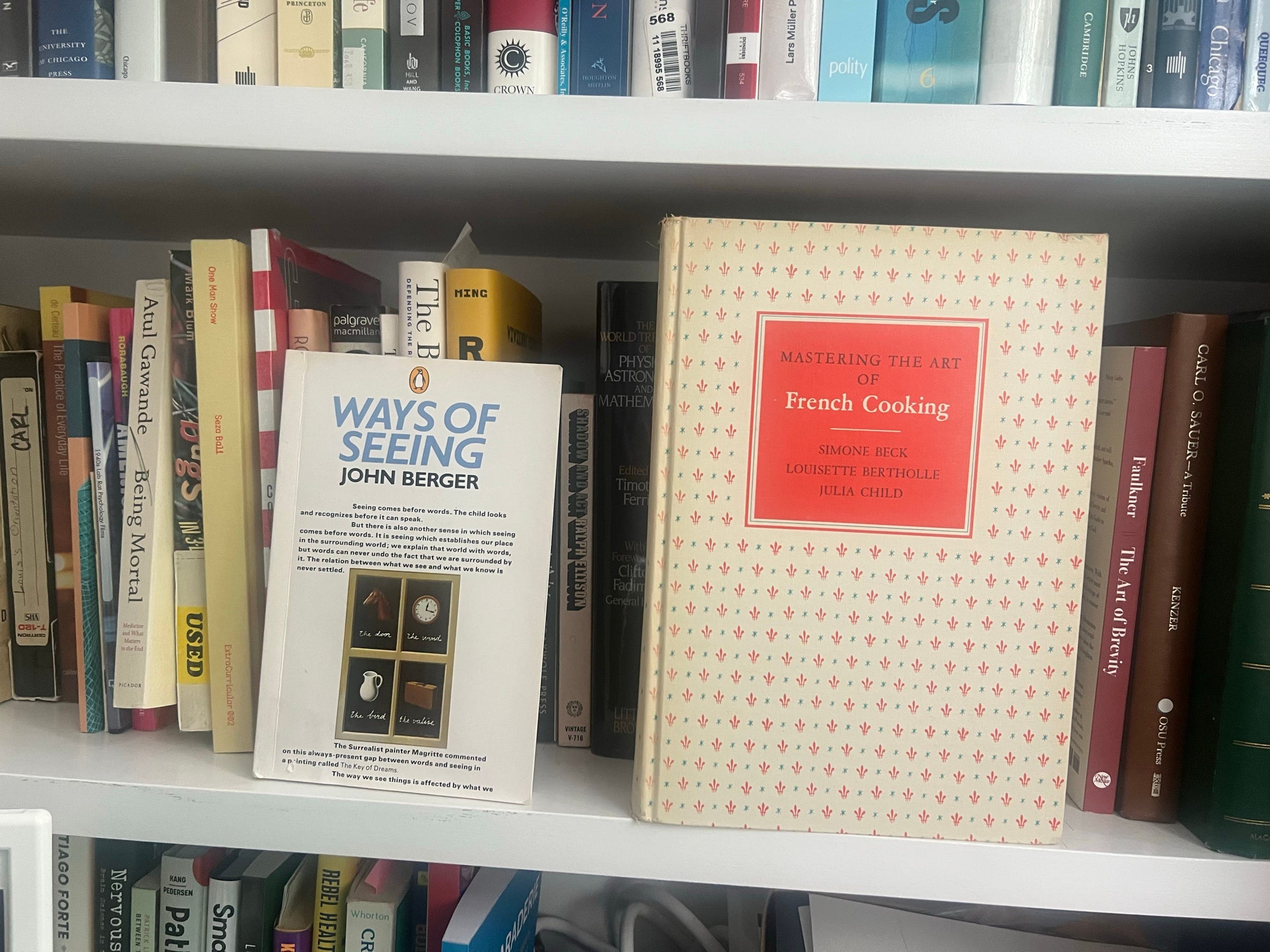
These two wonderful books, which differ in purpose, size, era, and personality, have something important in common. Both take a practice thought to require professional training and make it joyfully accessible to any attentive reader.
Mastering the Art of French Cooking has survived the complete transformation of food writing to remain a classic because it never panders to our fears or doubts our capacity to, yes, master techniques that seem intimidating when seen from a distance.
And Ways of Seeing has given a half century of college students their first permission to really look at a painting, and to ask the direct questions that will break their reliance on second-hand opinion: Why is it so big? Are they going to eat that food? Is that a dog’s tail peeking out from under the man’s armor?
My own skills in cooking and looking at paintings took a dramatic leap thanks to these books, and I remember how the weight of my embarrassment in the presence of expertise far beyond me lightened up, allowing me to learn. And then, as I did learn, they became even more interesting, since I was able to pick up on things I hadn’t been able to notice at first.
Empirical research is a skill. Although I consider myself an amateur and a beginner, I’ve been an amateur and a beginner for a long time, and I hope what I’ve written along with my coauthors can help you become a much better beginner, even if you already know a lot.
Books these days are a long shot, because their only purpose is to become a classic. No topic of urgent interest belongs in a book that takes years to come out, and the rising tide of agentic text deflates the value of anything that can be expressed as a list of instructions. A book only matters if it is so coherent that it creates its own world, from the cover to the index.
That’s why I still keep Julia Child and John Berger at hand. I want to feel their influence.
What are the chances my book will be a classic? I get that the probability rounds to zero. But I suppose if you are going to write a book, you should at least aspire to achieve its sole reasonable purpose, and so I have.
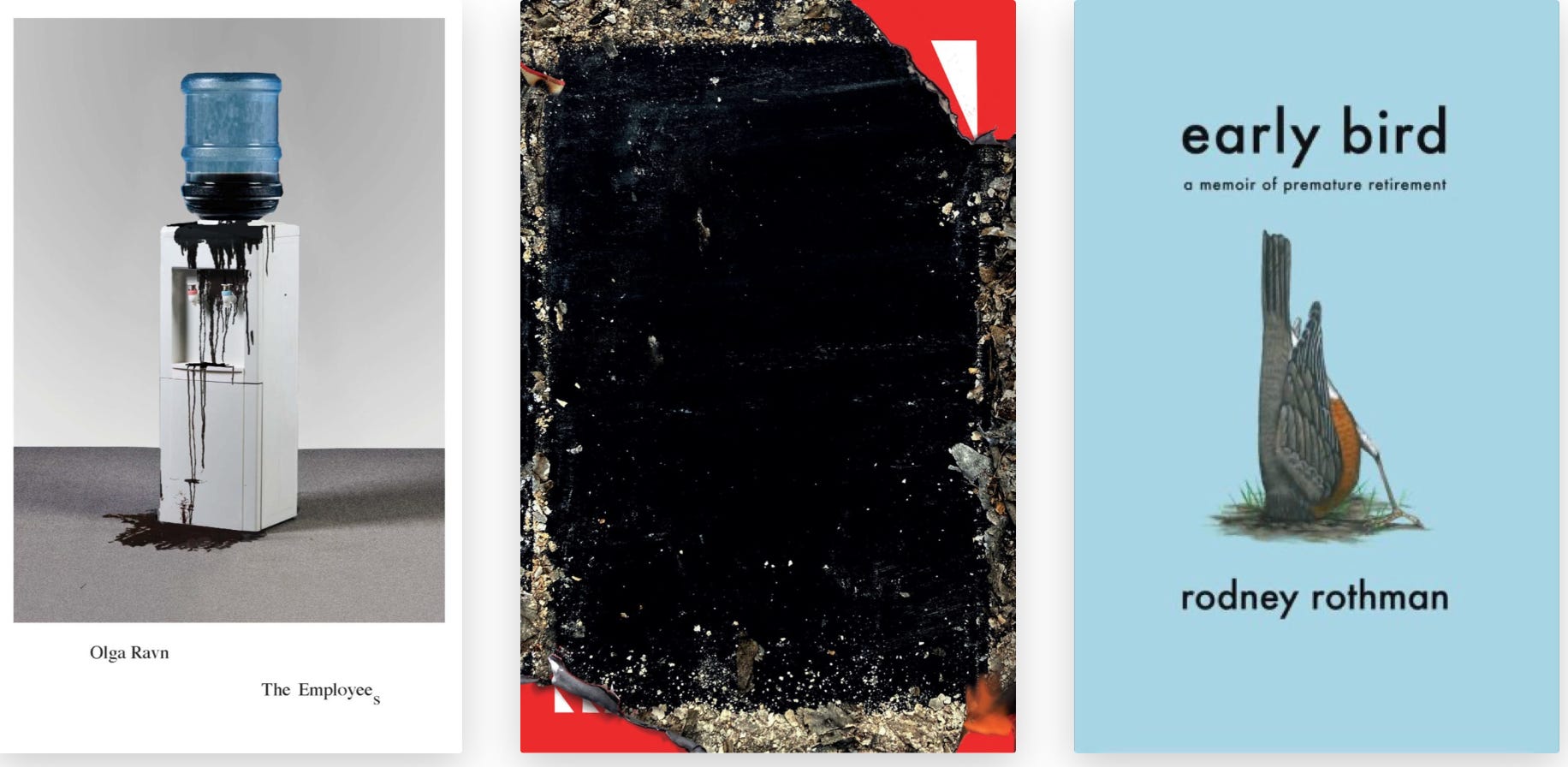
For the cover, I had a chance to work with the great graphic designer and illustrator Paul Sahre. Although we were only doing a small project together, with a 6” by 9” size constraint and a tight deadline, Paul’s inventiveness and generosity energized me so much that I still sometimes go back and look at the drafts and mechanicals. Paul wanted to explore as much of the territory as he could, seeing if we could get to that mix of clarity and friction that makes a message stick. I asked his permission to post this video that flashes through some of the things we tried, and of course he said yes.
Paul has designed some of my favorite book covers of all time, including these:
QS Show & Tell
My recent rebuild of the Quantified Self archive of Show & Tell talks gave me an excuse to browse randomly and endlessly. I plan to regularly include one or two that I come across in the newsletter. Here’s one I especially enjoyed because, like the presenter, I was also once a student at Reed College, and had to really figure out for myself how to study.

Separating Work and Home — Lydia Lutsyshyna
Recent Work from QS People
Stats on patient use of AI. Susannah Fox, author of Rebel Health, gives this summary of recent survey research on how people are using AI tools for healthcare. Her many well-informed readers provide additional links. Susannah published some of the first and most important data on consumer use of wearables when she was at the Pew Research Center's Internet & American Life. Her attention here is directly on the most important new thing. General opinion (good/bad, dangerous/safe) is worse than useless right now. We need concrete understanding.
Speaking of AI, Hugo Campos is exploring how agents support agency. He’s created a scoring tool for health AIs based on whether they help people understand, choose, question, and act. (His four criteria for judgment are interesting to compare to the question, observe, reason, explain model we use in our research and teaching.)
I’m going to write more in an upcoming newsletter about using HRV for self-observation, and much of it will be based on Marco Altini’s proven framework. But if you want your dose directly, get his new book about HRV for training: Heart Rate Variability: Science and Strategies for Peak Performance. It is written for performance athletes but contains many general techniques.
You may have read or heard that you should try some supplement to improve your sleep. Maybe it’s a good idea, but how would you know if it worked? Richard Sprague’s Substack, Personal Science, is full of direct, detailed examples of self-research practice. I read it every week. In this recent post he gives an account of his experience with one of the most touted supplements: Does magnesium help me sleep? The post finds an unexpected answer. Even more importantly, it shows you can use background data to reason about immediate personal questions.
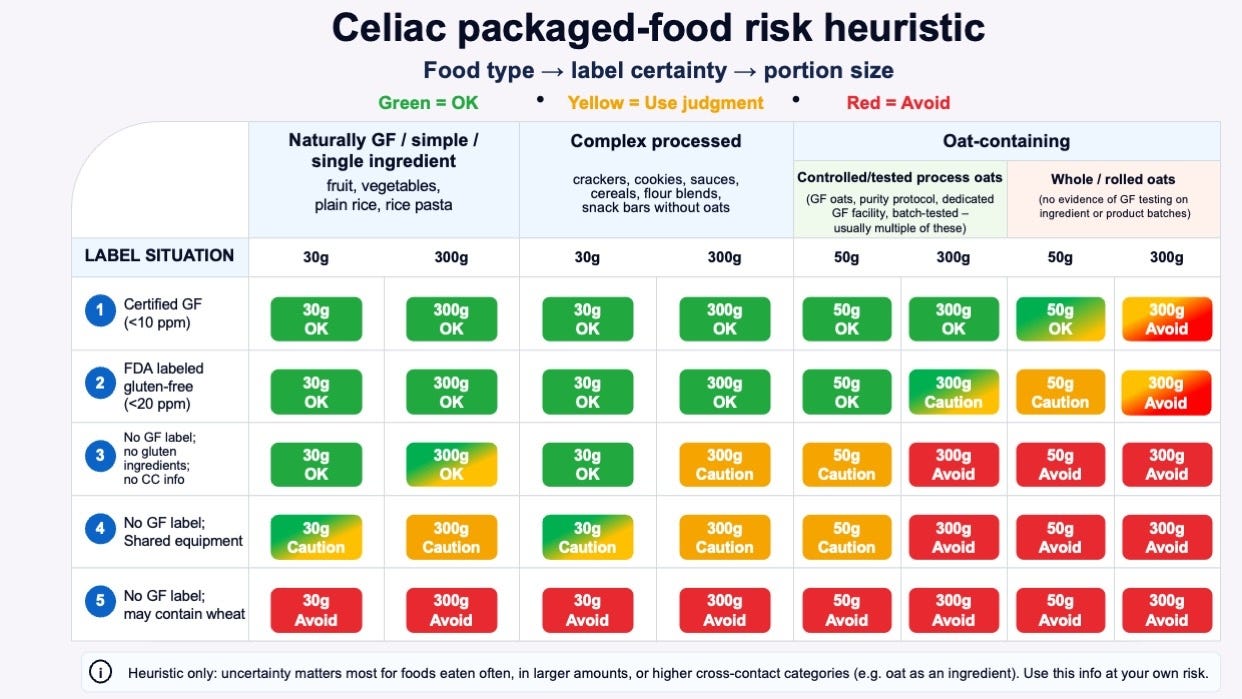
Finally, here’s a detailed account from Dana Lewis of her personal heuristics for judging whether certain foods are safe for her to eat. Dana’s post has lessons both for people managing celiac disease and for anybody who has to manage health choices involving endless small details. What do you do when standard published rules and guidelines simply don’t provide trustworthy guidance at the needed level of detail?
That’s it for this week. I’d love to hear what you’re working on. Are you running a personal experiment, developing a new tool, or revisiting an old QS project? Reply to this email or leave a comment below. I’ll highlight more work from the QS community in future issues.

I love that the Art of French Cooking is one of your inspirations.
I do wonder how many other quantifiable self folks also get really excited about the methodologies of work int he kitchen. My hunch is there's some significant overlap.
Yes! to reunion conference ❤️ love this Gary.